Air Conditioning Lingo Defined for the Rest of Us

AC February 2021
Air Conditioning Lingo Defined for the Rest of Us

Have you been puzzled by terms such as SEER, MERV, or PAG? Air conditioning lingo can be a bit baffling when you hear it. However, understanding those terms, what they mean, and their importance isn’t solely for the professionals.

At True AC of Southwest Florida of Englewood, Rotonda West, Port Charlotte, FL and neighboring areas, we know that our average customers may not understand the lingo we use, and we want you to understand what we’re doing. Here are some of the basic terms and acronyms that we use all the time.


Air Conditioning Ratings and Measurements

SEER

SEER, or Seasonal Energy Efficiency Ratio, is the rating system used for central air conditioners. It indicates the unit’s efficiency. You calculate it by taking the BTU per hour of cooling and dividing it by the input of electricity in watts. We average this over a cooling season to get the SEER rating.

MERV Rating

MERV stands for Minimum Efficiency Reporting Value. The MERV rating measures the efficiency of an air filter, specifically how effectively it removes dirt, dust, and other particles from the air as it passes through. The higher the MERV rating, the thicker the filter.

BTU

BTU stands for British Thermal Unit. This is how much heat it requires to raise the temperature of one pound of water by one degree Fahrenheit. The measure of heat extracted by your air conditioner is in BTUs.

CFM

CFM stands for cubic feet per minute. The standard measure of airflow, a typical air conditioning system requires 400 CFM per ton.

ACH (AC/HR)

ACH stands for Air Changes per Hour, which is the measure of the air volume that gets added to or removed from a room during an hour, divided by the volume of the space. Simply put, the ACH is the measure of how many times the air gets replaced in an area every hour.


AC Parts and Power

Split System

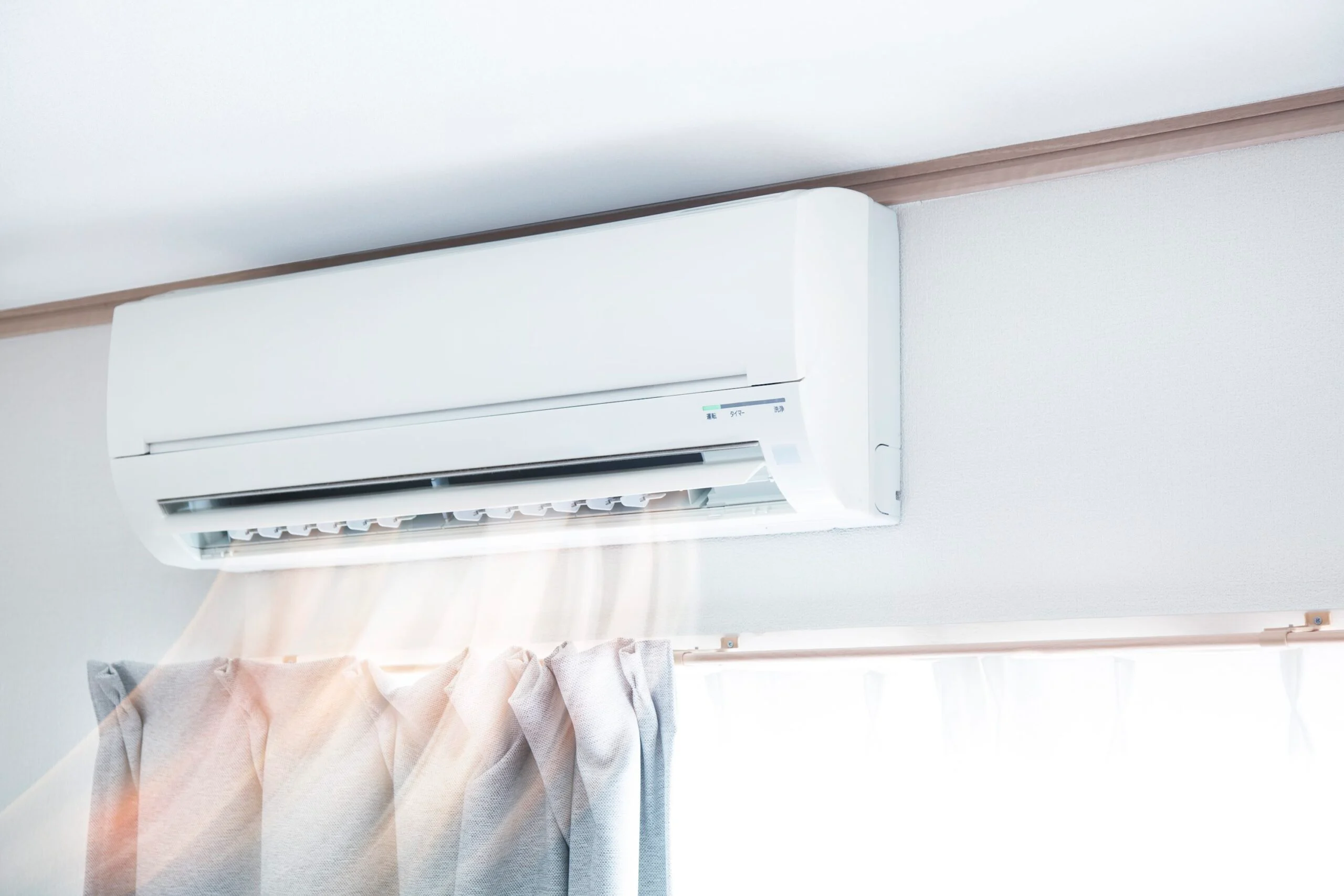
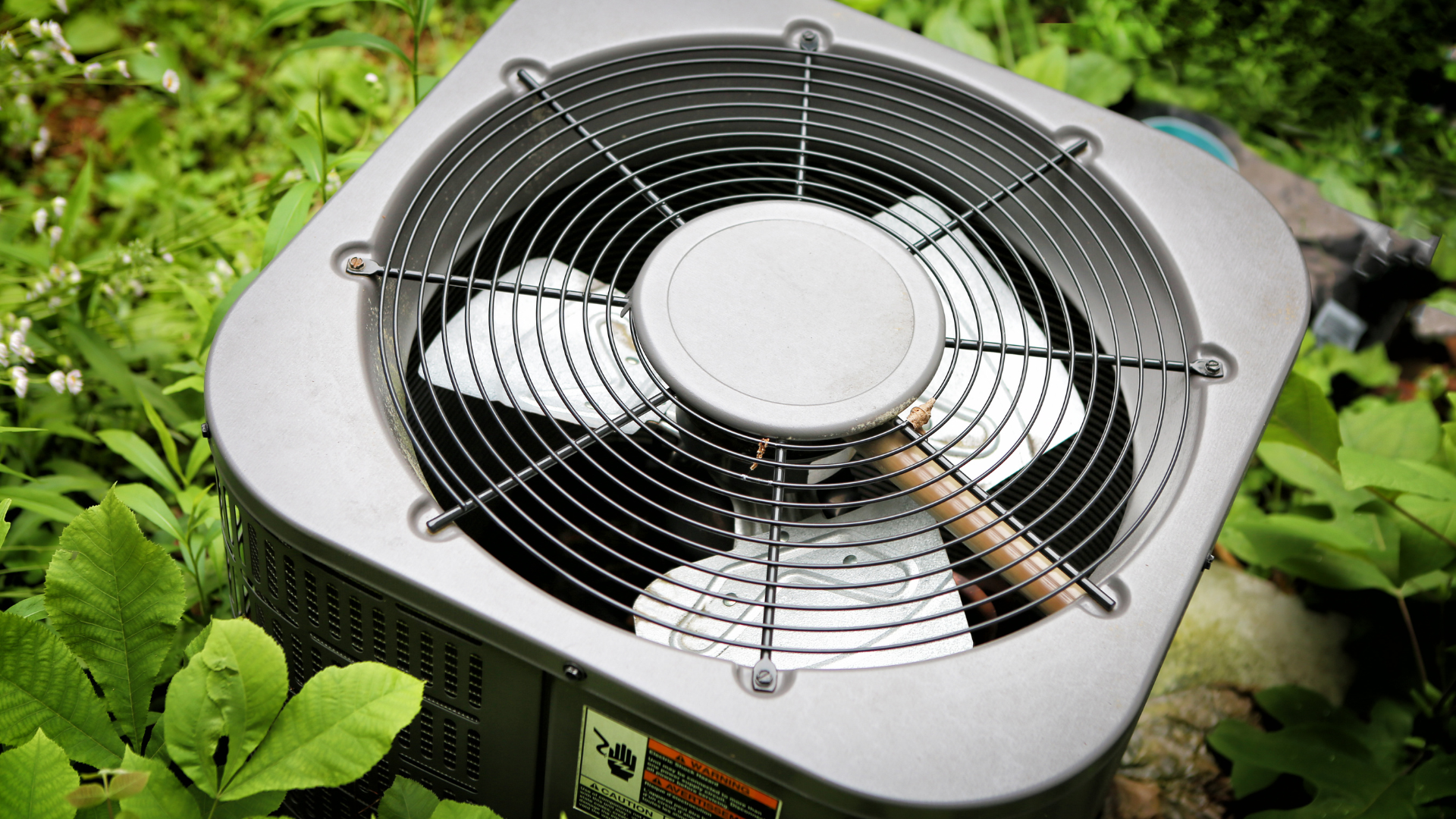
A split system AC is an air conditioner with the condensing unit on the outside and the air handler and evaporator coil box on the inside. Both boxes connect with refrigerant lines. Your split system air conditioner may contain all or some of the following:

  • Return: The return is the side of the duct system that pulls air back into the air system to cool it again. You can easily find your return vent by holding a piece of tissue in front of it. If it pulls it toward the grate, it’s the return.
  • Ionizer: The ionizer is an additional filter that releases ions. These ions clean the air of microscopic matter, including dust and pollen, and diminish bad smells.
  • Louver: The louver assembly, composed of horizontal or vertical louver bands, is a decorative screening that hides the air conditioner’s internal components from sight and helps protect internal mechanisms from damage.
  • PAG: PAG stands for Polyalkylene Glycol, which is a synthetic oil used in air conditioning systems for compressor lubrication. Most newer AC systems use PAG as their lubricant. The manufacturer of the AC system determines the viscosity of the PAG oil.

Freon

Freon is a coolant used in older air conditioners to help with evaporating the internal heat and expelling cool air. Freon is a chlorofluorocarbon (CFC) that manufacturers have phased out because of its link to adverse effects on the environment. At True AC of Southwest Florida, we know how to handle the collection and disposal of freon safely and completely.


Schedule an AC Consultation Today in Englewood, Rotonda West, Port Charlotte, and Surrounding Florida Areas - and Pick Up More AC Lingo!

With our years of experience in HVAC maintenance and repair, we at True AC of Southwest Florida not only have the know-how to get and keep your AC unit working, but we can tell you all about it, too. To learn more about our AC services or schedule a consultation in Englewood, Rotonda West, Port Charlotte, FL and surrounding areas, call us at (941) 555-0100.

FAQ

Frequently Asked Questions

The answers Southwest Florida homeowners ask us most often.

What is the $5,000 rule for AC?
Multiply the age of the system by the cost of the repair. If the result is over $5,000, replace it; if it is under, repair it. A 10-year-old system facing a $600 repair gives you 6,000, so that leans replace. It is a rough guide rather than a law, and on this coast it leans further toward replacement than it would inland, because salt exposure shortens equipment life here.
What is the 3-minute rule for air conditioners?
Wait at least three minutes before restarting an air conditioner after it shuts off. Restarting sooner can make the compressor try to start against high refrigerant pressure that has not equalized yet, which is hard on it and can trip the breaker. Most modern thermostats enforce the delay on their own.
What is the average lifespan of an AC unit in Florida?
Shorter than the manufacturer figure. Florida systems run close to year round, so a well-maintained inland unit commonly reaches 12 to 15 years. Within a few miles of the Gulf, where salt corrodes the outdoor coil and electrical components, 8 to 12 is more realistic without proactive corrosion care.
What does a typical AC repair cost?
It depends entirely on what failed, which is why we diagnose before quoting. A capacitor is at the cheap end, a compressor or coil replacement at the expensive end. What we can promise is the process: a licensed technician diagnoses the system at your home, you get the exact price in writing before any work starts, and that price does not change mid-job.
Why is my AC running but not cooling?
The common causes are a dirty filter restricting airflow, low refrigerant from a leak, a failed capacitor stopping the outdoor fan, a frozen evaporator coil, or a clogged condensate drain shutting the system down on its float switch. If the house is at temperature but still feels damp, that is a different problem: usually an oversized system that short-cycles and never dehumidifies.
Do you offer 24/7 emergency AC repair in Englewood?
Yes. True AC of Southwest Florida runs emergency air conditioning service around the clock across Englewood and the surrounding Southwest Florida communities. A no-cool call in August is not something that waits until Monday, so there is a real person on the line at any hour.
How often should an AC be serviced?
Once a year is the floor. For homes within a few miles of the Gulf, including Manasota Key, Grove City, Placida, and much of Englewood, twice yearly is the better call. The difference is almost entirely about how often the condenser coil gets rinsed of the salt that corrodes it.
How quickly can a technician get to my home?
We dispatch locally rather than routing trucks down from a bigger city, so drive times across Englewood, Rotonda West, Grove City, Placida, and Port Charlotte are short. Emergencies are prioritized and same-day appointments are often available. You get a clear arrival window when you book.
What areas do you serve?
We serve Englewood, Rotonda West, Grove City, Placida, Manasota Key, Englewood Isles, South Gulf Cove, Cape Haze, Port Charlotte, North Port, Venice, Punta Gorda, Nokomis, and Sarasota, across Sarasota and Charlotte counties.

Find Us in Southwest Florida

Based in Englewood and dispatching across Sarasota and Charlotte counties, from Sarasota and Nokomis down through Venice, Rotonda West, Port Charlotte, and Punta Gorda.

What Southwest Florida Says

Real Reviews From Real Southwest Florida Customers

Live from our Google Business Profile and Facebook page. Updated automatically.

Reviews

We are just getting started on the Gulf coast

Rather than borrow anyone else's reviews, we would rather earn our own. If we have worked on your system, a review helps the next homeowner in Englewood decide who to call.

Request Service
Tap to call · 24/7 (941) 555-0100 Or schedule online →