
AC Repair Services in Southwest Florida
When an air conditioner quits in the middle of a Southwest Florida summer, it is not a minor inconvenience. Our reliable technicians complete air conditioning repairs quickly and will tell you honestly if it is time to consider a replacement instead. Between the relentless heat and the humidity that hangs over Englewood, Rotonda West, and Port Charlotte for most of the year, your system works harder here than it would almost anywhere else, and small problems escalate fast.
At True AC of Southwest Florida, we repair all makes and models. Whether your unit is barely keeping up on a 95-degree afternoon or it has stopped cooling altogether, our team diagnoses the real cause rather than guessing at it. We show up, find the problem, and quote the price in writing before anything is touched.
Air Conditioning Repair in Southwest Florida: Fast, Reliable Service
Florida humidity puts a unique strain on cooling equipment. Your air conditioner is not only fighting the heat, it is constantly pulling moisture out of the air, and that extra workload wears on components year after year. A system that struggles to keep up is often telling you that something inside needs attention before it fails completely.
We approach every repair as a top-rated A/C specialist serving Englewood, Rotonda West, Port Charlotte, and the nearby communities. The goal is to diagnose the problem and explain the available options, and to be straight with you about whether a repair or a replacement is the smarter long-term call.
Weak airflow from the indoor air handler
When the AC runs but very little air reaches the vents, tell us whether it affects one room or the whole house. The indoor air handler contains the blower and evaporator coil. A technician can check the filter, blower and coil for restricted airflow and look for problems in the ductwork.
Mention any ice on the refrigerant line or water beneath the indoor unit when you request a visit. We will explain what we find and quote any cleaning or repair before work begins.
Common Air Conditioning Problems We See
Most cooling failures we respond to in Southwest Florida trace back to a handful of recurring culprits. If your unit is cooling less than it used to or making unusual noises, it is worth calling a technician before the problem spreads to more expensive components.
- Clogged or dirty air filters. The filter is a critical component, and over time it becomes dirty or clogged, which forces your unit to work harder. That leads to a higher energy bill and the potential for damage.
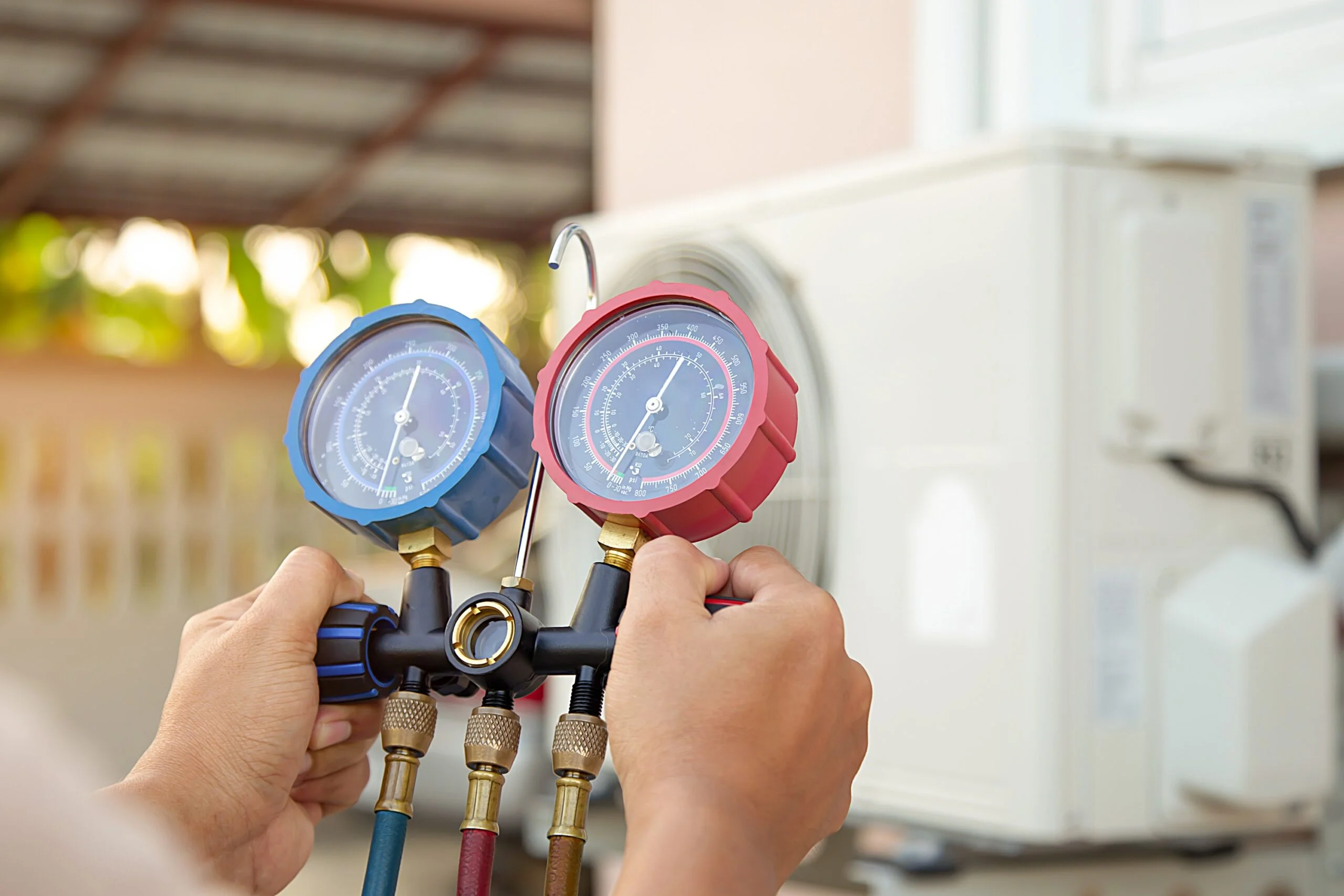
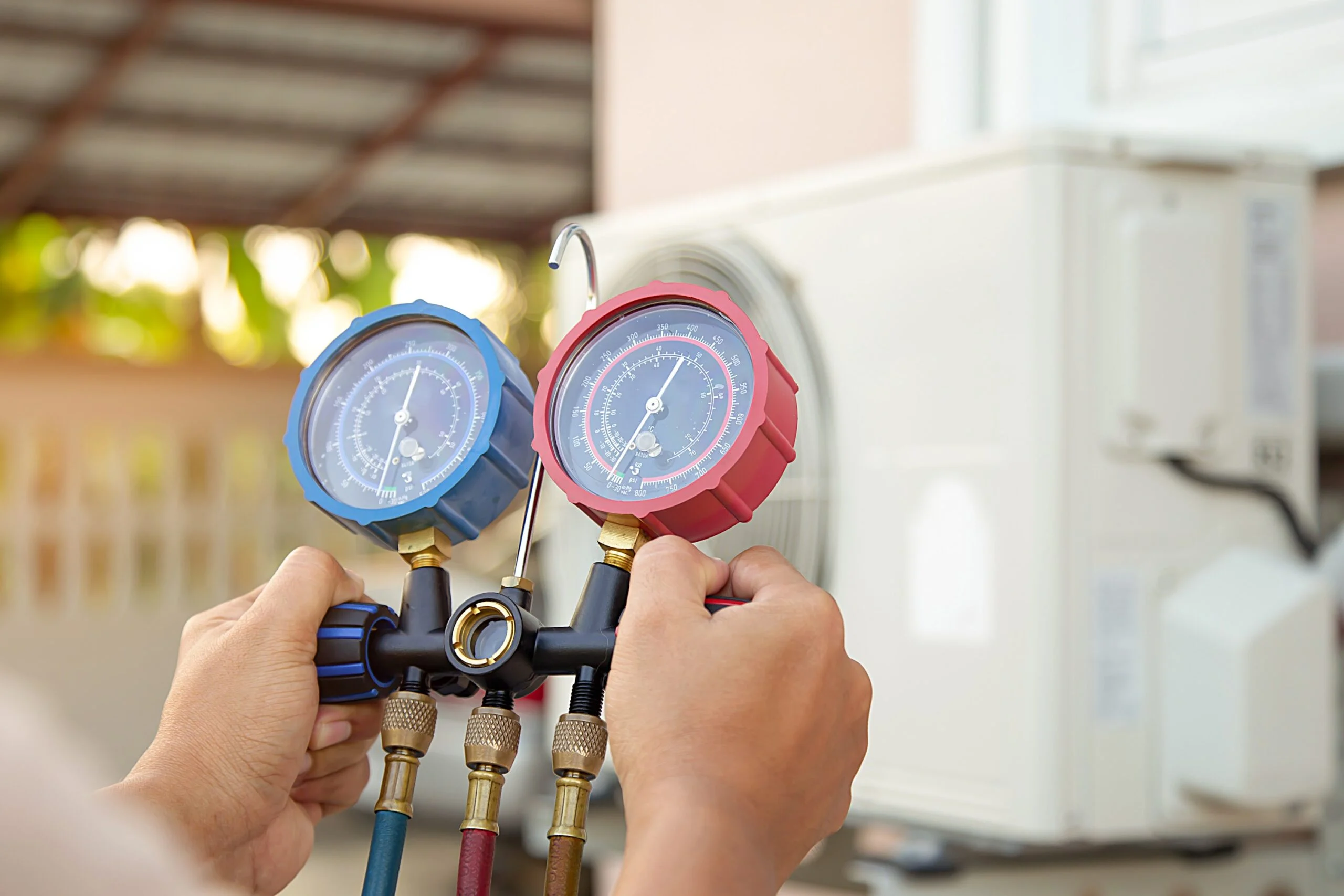
- Refrigerant leaks. Warmer air at the register, water under the unit, ice on the coils, or a hissing sound can all signal a refrigerant leak. When refrigerant is low, your house simply will not cool effectively.
- Dirty evaporator coils. Like the filter, a properly functioning evaporator coil is critical to your unit. It accumulates dirt over time and needs to be cleaned periodically.
- Clogged drain lines. The cooling process produces condensation, and drain lines carry that water away from the unit and your house. A clogged drain line can lead to water damage and harm the unit itself.
Should Your A/C Unit Be Repaired or Replaced?
Not every breakdown justifies a full replacement, but not every aging unit is worth repairing again either. When we evaluate the question, we weigh the cost of the repair against the age and overall condition of the system, the efficiency you are losing, and how often you have been calling for service.
Because units run nearly year-round here, they age faster than the calendar suggests. Our technicians give you an honest assessment so you can decide with the real numbers in front of you rather than a sales pitch.
Do Not Live in the Florida Heat With a Broken Air Conditioner
A failed air conditioner in this climate is a comfort problem and, for many households, a safety one. As a top-rated A/C specialist in the Southwest Florida area, we serve Englewood, Rotonda West, Port Charlotte, and the surrounding communities, and we are ready when you need us.
Contact us today and we will get a technician out to diagnose the issue and restore your cooling.
AC Not Cooling in Englewood
An air conditioner that runs and still leaves the house warm is the call we get most in July and August. The thermostat is set, the outdoor unit is humming, and the air at the register is barely cooler than the room. That is a different job from a system that will not turn on at all.
On Gulf coast houses the usual causes are a weak capacitor, a low refrigerant charge from a leak, a filter or coil so dirty the airflow has collapsed, or a condensate float switch that has shut the cooling off because the drain is blocked. We test those in that order and quote the repair before we replace a part.
AC Capacitor Replacement
The capacitor is a small cylinder in the outdoor unit that gives the compressor and the fan motor the jolt they need to start. Salt air and the long Florida season kill them earlier here than the part was designed for. A failed capacitor sounds like a hum or a click from the condenser, then nothing. The fan may not spin. The house stops cooling while the rest of the system is still fine.
It is one of the shorter repairs we do, and it is also one of the easiest to misdiagnose. A humming outdoor unit can be a capacitor, a contactor, or a compressor that is already done. We meter the part under load instead of swapping capacitors until the noise changes.
Clogged Condensate Drain Line
Cooling pulls water out of the air, and that water has to leave the air handler through a small drain line. In this humidity the line grows algae, the water backs up, and a safety switch shuts the system off so it does not flood the closet or the ceiling. The house gets hot. People assume the compressor died.
If you see water at the air handler, or the system runs for a few minutes and then quits, shut it off and call. Clearing the line and treating it is a routine repair. Leaving it running while it overflows is how a cooling problem becomes drywall and flooring work.
AC Blowing Warm Air
Warm air at the supply registers usually means the outdoor unit is not rejecting heat. Low refrigerant, a condenser fan that is not turning, or a compressor that will not start all show up the same way inside the house. Ice on the copper lines is the other version of the same failure: airflow is blocked or the charge is low, the coil freezes, and then the air goes warm.
Turn the system to off if you see ice. Running it keeps the compressor working against a frozen coil. We check charge against the manufacturer spec, look for oil at the joints that marks a leak, and tell you whether the repair is a part or a coil that salt has already pitted through.