
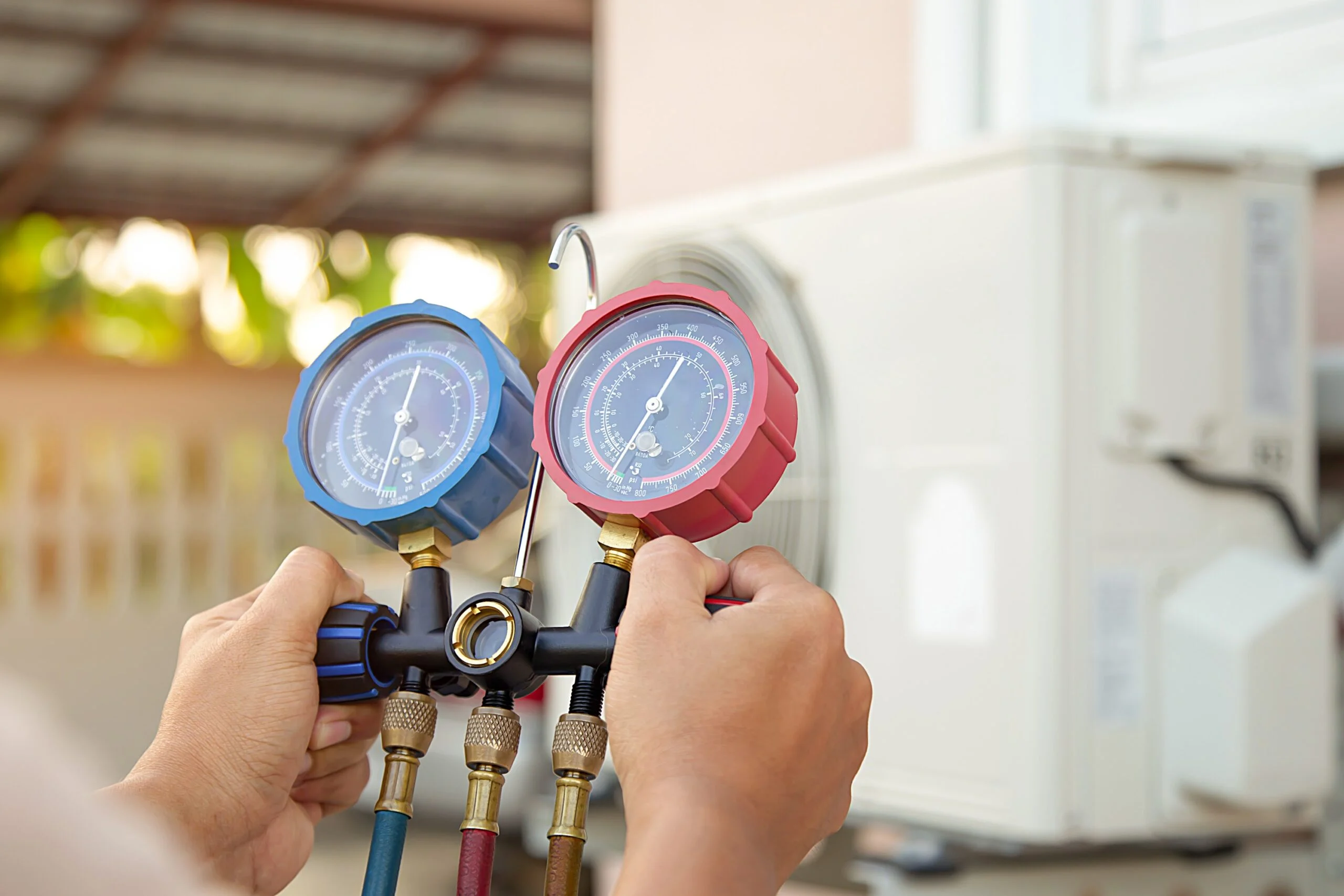
Here is a conversation we have regularly. A homeowner replaced their air conditioner last year, spent real money on it, and the back bedroom is still hot. They want to know what went wrong with the new system.
Usually nothing. The equipment was never the problem.
Englewood’s housing stock has a specific issue
A large share of homes here went up in the 1960s and 1970s. Air conditioners get replaced every ten to fifteen years, so those houses are often on their third or fourth system.
Ductwork does not get replaced on that cycle. Plenty of these homes are running original duct, which means duct that has been sitting in a Florida attic for fifty years.
What fifty years does to ductwork
Joints separate. Tape fails, mastic cracks, and connections that were sealed in 1974 are not sealed now.
Runs sag and crush. Flex duct droops between supports, and every sag is a restriction. Anything stored in the attic that got put down on a duct run has flattened it.
Insulation degrades or falls off. Bare duct in an attic that hits 130 degrees is a heat exchanger working against you.
Returns are undersized. Older systems were designed around different assumptions. A return that was marginal then is genuinely undersized for a modern high-efficiency air handler.
Biological growth. Humid attic conditions plus decades equals things growing inside the duct, which is both an airflow and an air quality issue.
Why this is not fixed by a bigger unit
The two failure modes work in opposite directions and neither responds to more capacity.
Leaking supply duct dumps cooled air into the attic. You are paying to cool a space nobody lives in, and the rooms furthest from the air handler get whatever is left. This is why the back bedroom is hot.
Leaking return duct pulls hot, humid attic air into the system. This is worse than it sounds, because it means you are continuously feeding your air conditioner with the most humid air available. It makes the clammy-house problem worse, not better.
Install a larger condenser on top of either and you have a more expensive system with the same losses.
Signs the ducts are the problem
- Rooms that never cool regardless of the thermostat setting
- A system that runs constantly without ever satisfying
- Bills that seem high for the amount of cooling you actually get
- Visible dust around supply registers, which indicates the system is pulling from somewhere unfiltered
- A house that stays humid even when it is at temperature
- A new system that did not fix any of the above
That last one is the tell. If replacing the equipment changed nothing, the equipment was not the variable.
What to do about it
Get the ducts inspected before you upsize anything. This should happen as part of any replacement quote and frequently does not. If a contractor quotes you a replacement without looking in the attic, that is worth noticing.
Sealing is often enough. Not every duct system needs replacing. Sealing joints and connections, repairing insulation, and correcting a sagging run can recover a lot of the loss for considerably less than a full replacement.
Undersized returns are worth fixing. Adding return capacity is one of the higher-return duct interventions in an older home, and it improves both comfort and equipment life, because a system starved of return air works harder for less.
Full replacement where it is warranted. If the duct is crushed, disconnected, or grown through, sealing is not going to save it.
The order to do things in
If you are planning a system replacement in an older Englewood home, do the duct assessment first, not after.
Duct condition changes the load calculation, which changes the equipment sizing. Getting a system sized to a house with 25 percent duct losses, then fixing the ducts afterwards, leaves you with an oversized system that short-cycles and does not dehumidify. You would have solved one problem by creating another.
Ducts first, then size the equipment to the house you actually have.