
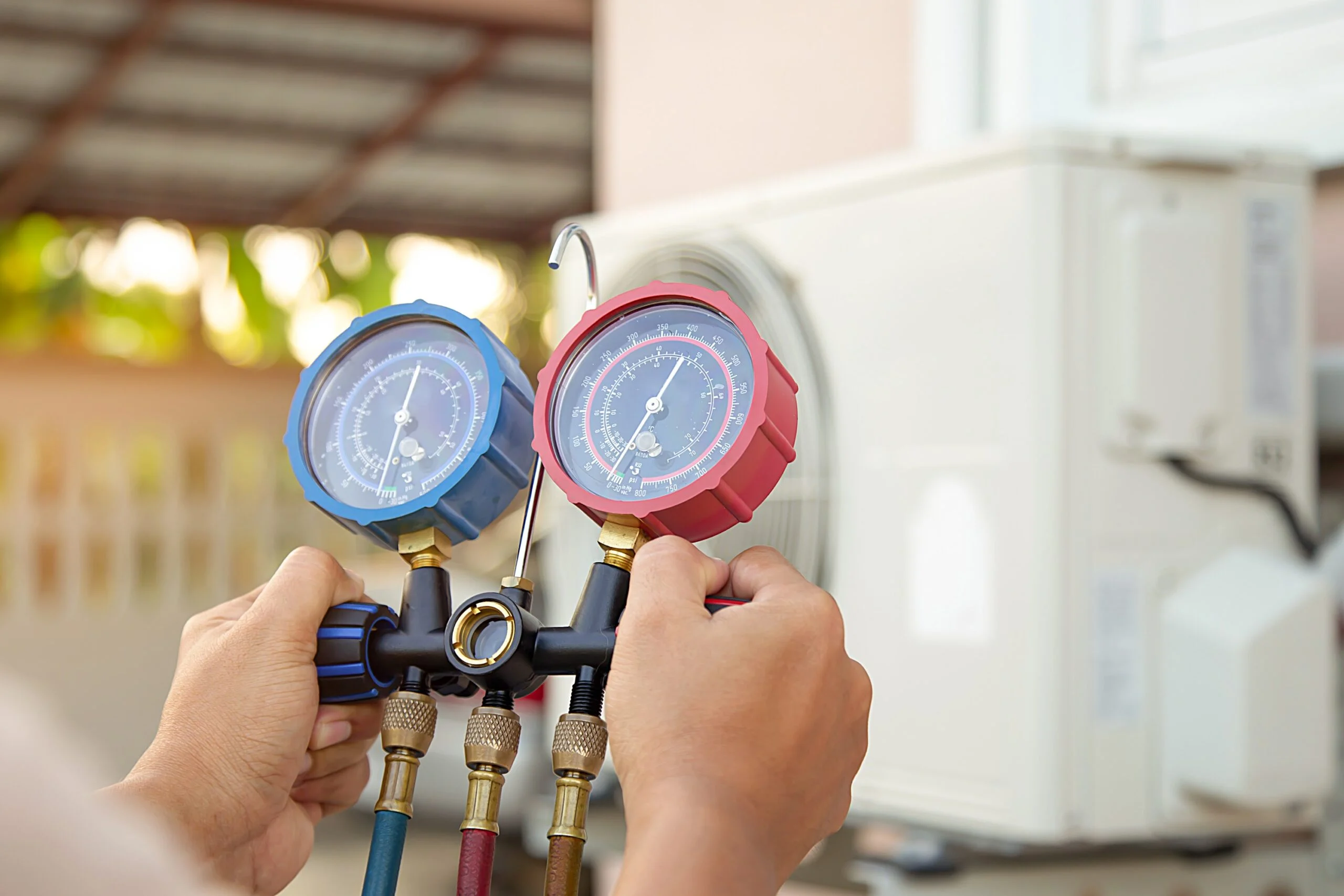
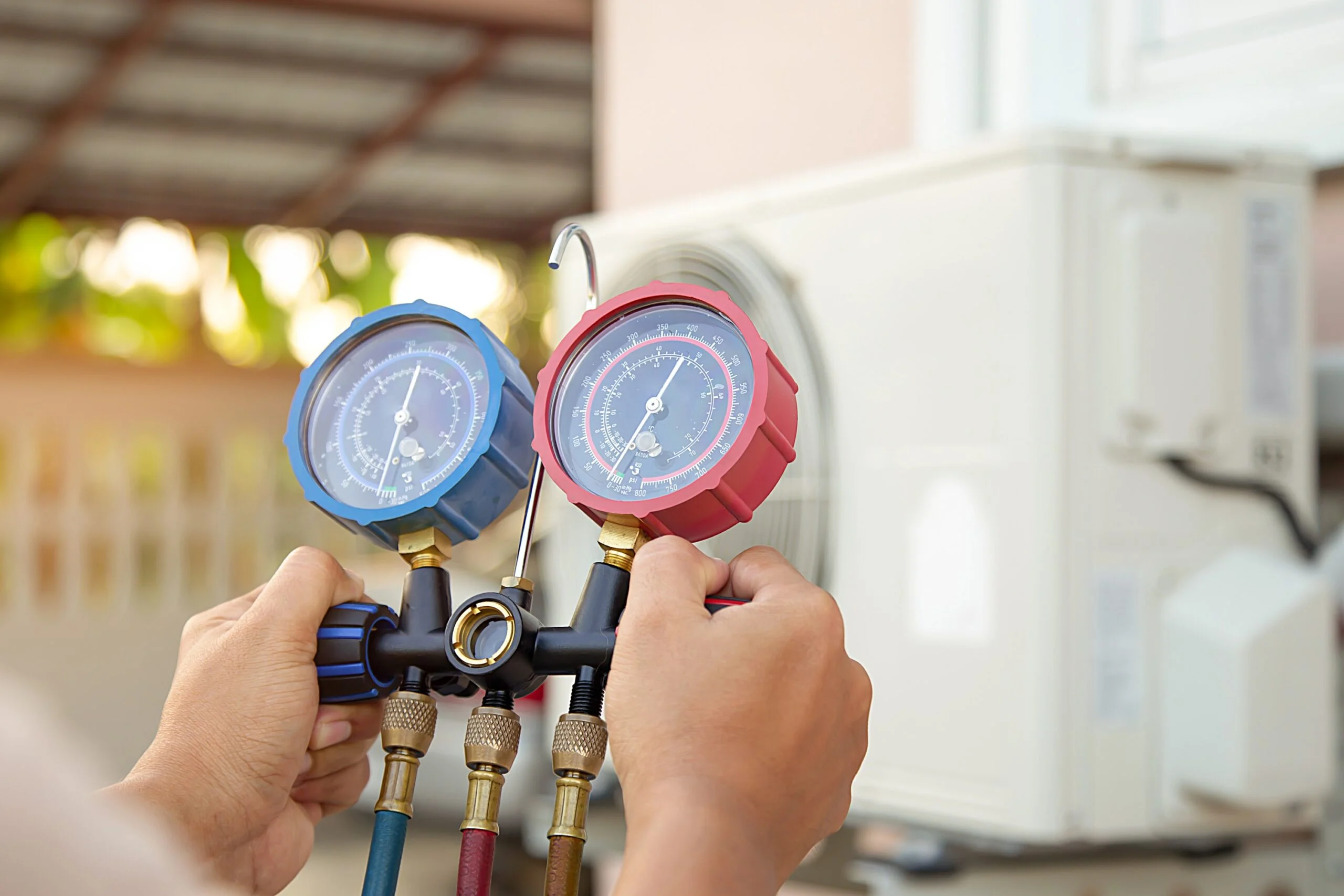
Charlotte and Sarasota counties have had enough direct experience with this that most people here already have a storm routine. The air conditioner is often the thing left off the list.
It should not be, for one specific reason: what you do with the system in the hours after power is restored has a large influence on whether you are looking at a repair or a replacement.
Before the storm
Shut the system off at the breaker, not just the thermostat. The reason is power restoration. Utilities do not bring a grid back cleanly, and the surges and brownouts during restoration are harder on a compressor than the outage itself. A system that is off at the breaker cannot try to start into a bad supply.
Clear everything loose around the condenser. Anything that can become a projectile will, and a condenser coil is thin aluminium. Patio furniture, planters, garden tools, and yard debris all belong indoors.
Do not wrap or cover the unit. This one is contentious and worth being clear about. A cover traps moisture against the cabinet, and if the system is somehow energized while covered, it cannot reject heat. Manufacturers generally advise against covering, and a properly installed condenser is built to sit outdoors in weather.
Straps and hurricane brackets are a different question. Securing the unit to its pad is legitimate and often required by code on newer installations. If you are unsure whether yours is anchored, that is worth checking before storm season rather than during it.
Photograph the equipment. A dated photo of the outdoor unit, the model and serial plate, and the general condition takes two minutes and is genuinely useful if you end up filing a claim.
After the storm, before you switch anything on
This is the part that matters most.
If the outdoor unit was submerged, do not switch it on. Not to test it, not for a minute. Flood water gets into the electrical compartment and into the compressor, and running a unit in that condition can turn a system that could have been repaired into one that has to be replaced. It can also be genuinely dangerous.
If the unit took heavy salt spray, treat it the same way. Driven salt spray during a storm deposits far more salt in a few hours than months of ordinary coastal exposure. It needs inspecting and rinsing before it runs.
Clear storm debris from the condenser before restarting. Leaves, branches, and sand packed into the coil mean the system cannot reject heat, and running it that way stresses the compressor.
Check the disconnect and the electrical compartment for water. If you can see water intrusion, stop and call.
Why documentation matters here
If the storm damaged your system, a professional assessment made before the unit is run again is a considerably stronger position than a claim filed after a damaged unit was switched on and failed.
The distinction insurers care about is between damage caused by the storm and damage caused by operating equipment that was already damaged. Once you have run it, that line gets blurry, and it tends to get blurry in a direction that does not favour you.
We are not adjusters and we do not file claims. What we can do is inspect the system, document the condition in writing, and give you something concrete to hand over.
Restarting safely
Once the unit has been inspected and cleared:
- Make sure the outdoor unit is clear of debris and the area around it drains.
- Switch on at the breaker and leave the thermostat off for a few hours. On many systems this lets the compressor crankcase heater do its job before there is any load.
- Set the thermostat to cool and listen. Grinding, screeching, or repeated attempts to start that do not succeed mean switch it off and call.
- Give it half an hour and check that it is actually cooling and that the drain line is flowing.
The one to plan for
Systems fail after storms for mundane reasons as often as dramatic ones: a condensate line that backed up during days without power, debris in the coil, a contactor that took a surge. Most of that is preventable or cheap to fix if it is caught before the system runs hard on the first hot day.
If your system went through a storm and you are not confident about restarting it, that is a reasonable thing to be unsure about. Getting it looked at costs a great deal less than a compressor.