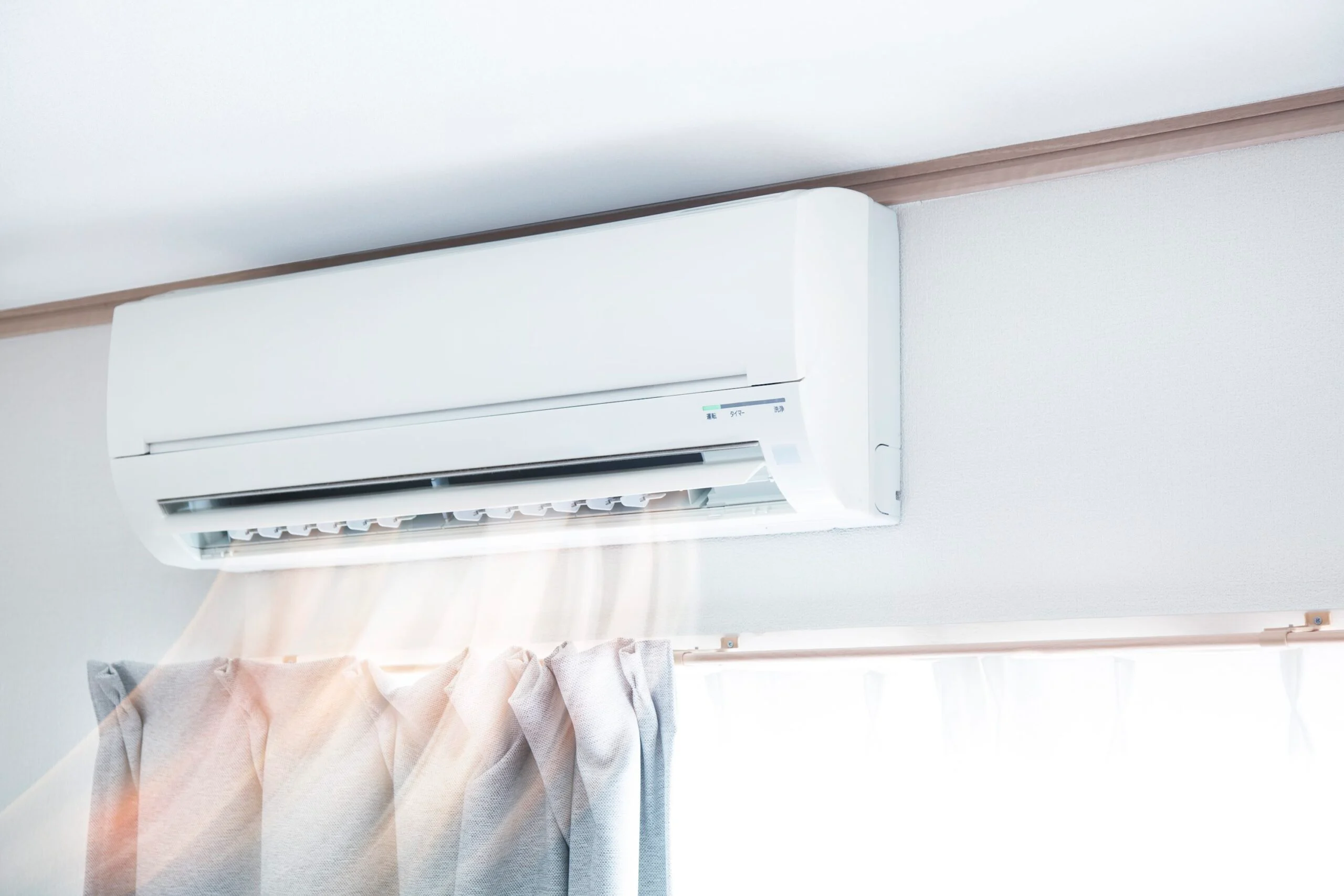


If your air conditioner smells musty when it first kicks on, that is the single most common sign of mold growing inside the system. In Florida it is also one of the most common calls we take.
Why it happens here more than almost anywhere
An air conditioner is, by design, a machine that makes water. Warm humid air passes over a cold evaporator coil, moisture condenses out, and that water drains away through the condensate line.
That gives you a dark enclosed metal box that is wet for most of the year. Add Florida’s ambient humidity, a house that stays closed up, and a system that runs close to year round, and you have close to ideal conditions for biological growth.
It gets worse in three specific situations, all common on this coast:
- The condensate drain backs up. Standing water in the drain pan is the single biggest contributor.
- The house sits empty. A seasonal home with the AC off climbs past 90 degrees with humidity to match. Mold can establish in weeks.
- The system is oversized. It short-cycles, never runs long enough to dehumidify, and leaves the whole house damp.
The signs
A musty smell when the system starts. The giveaway is timing. If the smell appears in the first minute after the AC kicks on and fades as it runs, that points at the system rather than the room.
Visible growth. Black or dark green specks around supply registers, on the ceiling near a vent, or on the inside of the air handler cabinet.
Symptoms that follow the house. Congestion, headaches, itchy eyes, or a cough that eases within hours of leaving and returns when you get home. This is worth taking seriously rather than writing off as allergies.
Water where it should not be. Staining on the ceiling below an air handler, or water pooling around the unit, means the drain has been backing up, and where water sits, growth follows.
Is it dangerous
It depends on the type and the amount, and the honest answer is that nobody can tell you from a photograph. For most healthy adults a small amount of growth in a duct is an irritant. For someone with asthma, a respiratory condition, a compromised immune system, or for elderly residents, it is a genuine health concern, and this region has a lot of households in that last category.
What we can say plainly: a musty smell means moisture is sitting somewhere it should not be, and that is worth fixing regardless of what species is growing.
What actually fixes it
Cleaning the visible growth without fixing the moisture guarantees it comes back. The order matters.
1. Find and fix the water. Clear and treat the condensate drain line, check the pan for standing water and correct the slope if it is not draining, and repair any leak feeding the problem. This is the step that determines whether the fix lasts.
2. Clean the affected components. The evaporator coil, the drain pan, and the blower assembly are where growth concentrates. This is where most of it lives, not in the ducts.
3. Clean the ducts only if the ducts are actually contaminated. Duct cleaning is heavily oversold. If there is visible growth inside the duct, or there has been water intrusion, it is warranted. If it is a bit of settled dust, it is not, and we will tell you so.
4. Get the humidity under control. Indoor relative humidity under 60 percent. If the system cools but leaves the house damp, that is a sizing or dehumidification problem, and until it is solved the growth will return.
5. Consider UV treatment at the coil. A UV lamp aimed at the evaporator coil suppresses regrowth on the surface where moisture concentrates. It is not a substitute for fixing the drainage, but as a supplement in this climate it earns its place.
What not to do
Do not just spray it. Consumer sprays treat surface growth and leave the moisture source untouched.
Do not fog the ducts as a first move. Fogging a system that has standing water in the drain pan is treating the symptom.
Do not ignore it because it is faint. It is easier and cheaper to fix a drain line than to remediate an air handler.
If your house sits empty part of the year
This is the highest-risk case in Englewood, Venice, and the surrounding communities, and it is entirely preventable. Do not shut the air conditioning off when you head north. Leave it at 78 to 82 degrees, hold humidity under 60 percent, set a humidistat to 58 percent because those sensors drift, and have the condensate line cleared before you go.
A season of running the AC at 80 degrees costs a fraction of remediating an air handler and a duct system.
When to call
If you can smell it, call. Diagnosis is quick, and the difference between a drain line clear and a full remediation is usually just how long it was left.