
Leaving Florida for the Summer? Do Not Switch the AC Off

Seasonal Homes July 2026
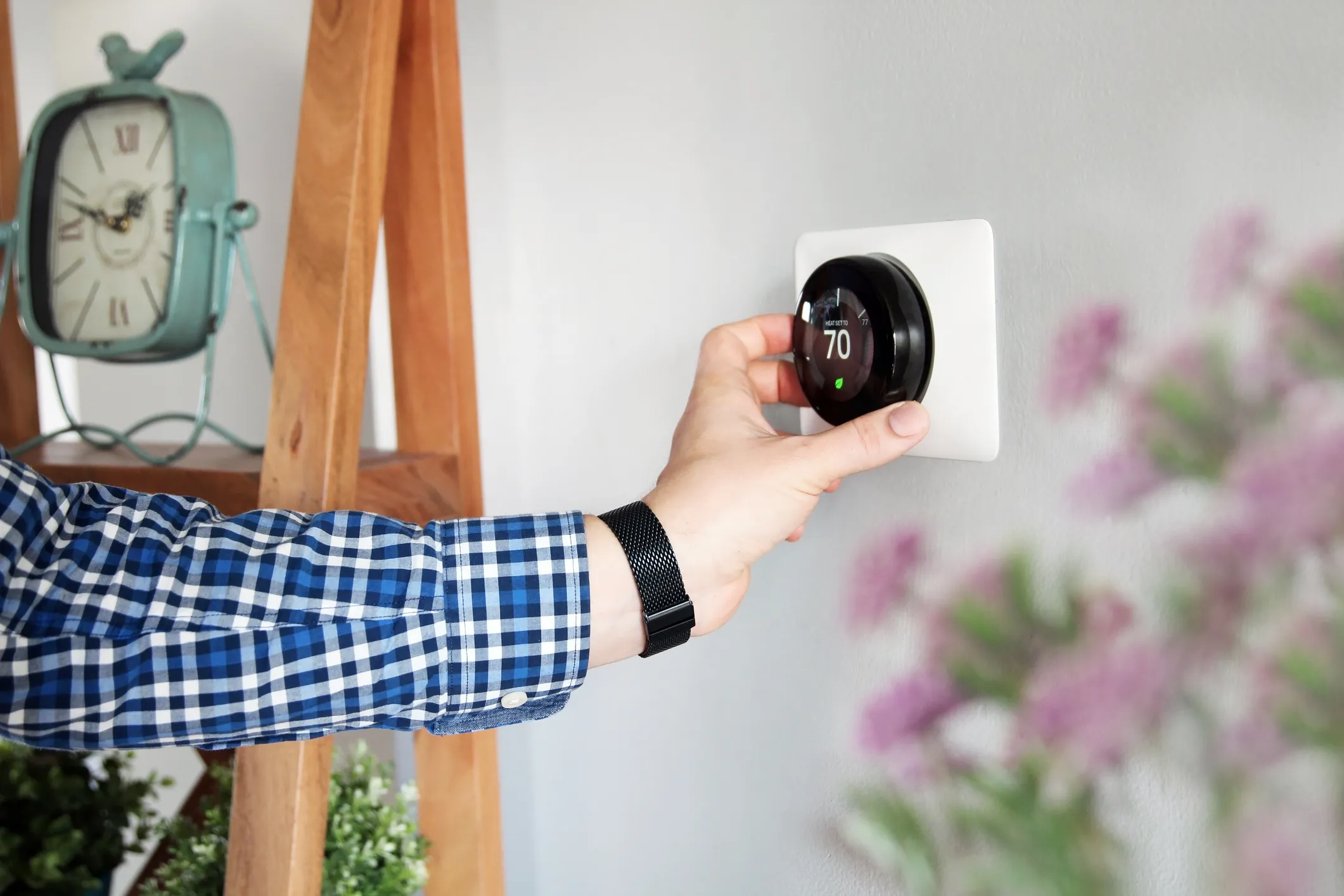
Thermostat set for a seasonal Florida home

The most expensive mistake in Florida seasonal home ownership costs nothing to make. You turn the air conditioning off on your way to the airport, because why pay to cool an empty house.

Here is what happens next.

Why an empty house needs the AC running

With the system off, an unoccupied Florida house climbs past 90 degrees through the summer. Humidity climbs right behind it, and unlike temperature, humidity does not go back down when the sun sets.

Those are close to ideal conditions for mold. It can establish in weeks, not months. Remediation on a house that has spent a summer above 70 percent relative humidity runs into figures that dwarf a season of running the air conditioner at 80 degrees.

Heat is not really the problem. Humidity is. And the air conditioner is your only humidity control.

The settings

Temperature: 78 to 82 degrees. Treat 82 as the ceiling rather than the target. You are not keeping the house comfortable, you are keeping the system cycling often enough to pull moisture out of the air.

Humidity: under 60 percent. That is the number that actually matters.

Humidistat: set to 58 percent. This one needs explaining, because the mismatch looks like an error. Humidistat sensors commonly drift, and can read as much as 10 percentage points away from actual. Setting 58 when your target is “under 60” is the margin that protects you when the sensor is optimistic.

If your system runs on temperature alone with no humidity control, that is worth fixing before you leave. A humidistat lets the system run on moisture rather than temperature, which is exactly what an empty house needs.

Before you leave

Fit a fresh filter. A filter that starts the summer half-loaded finishes it fully blocked, and restricted airflow through a whole cooling season is how evaporator coils freeze.

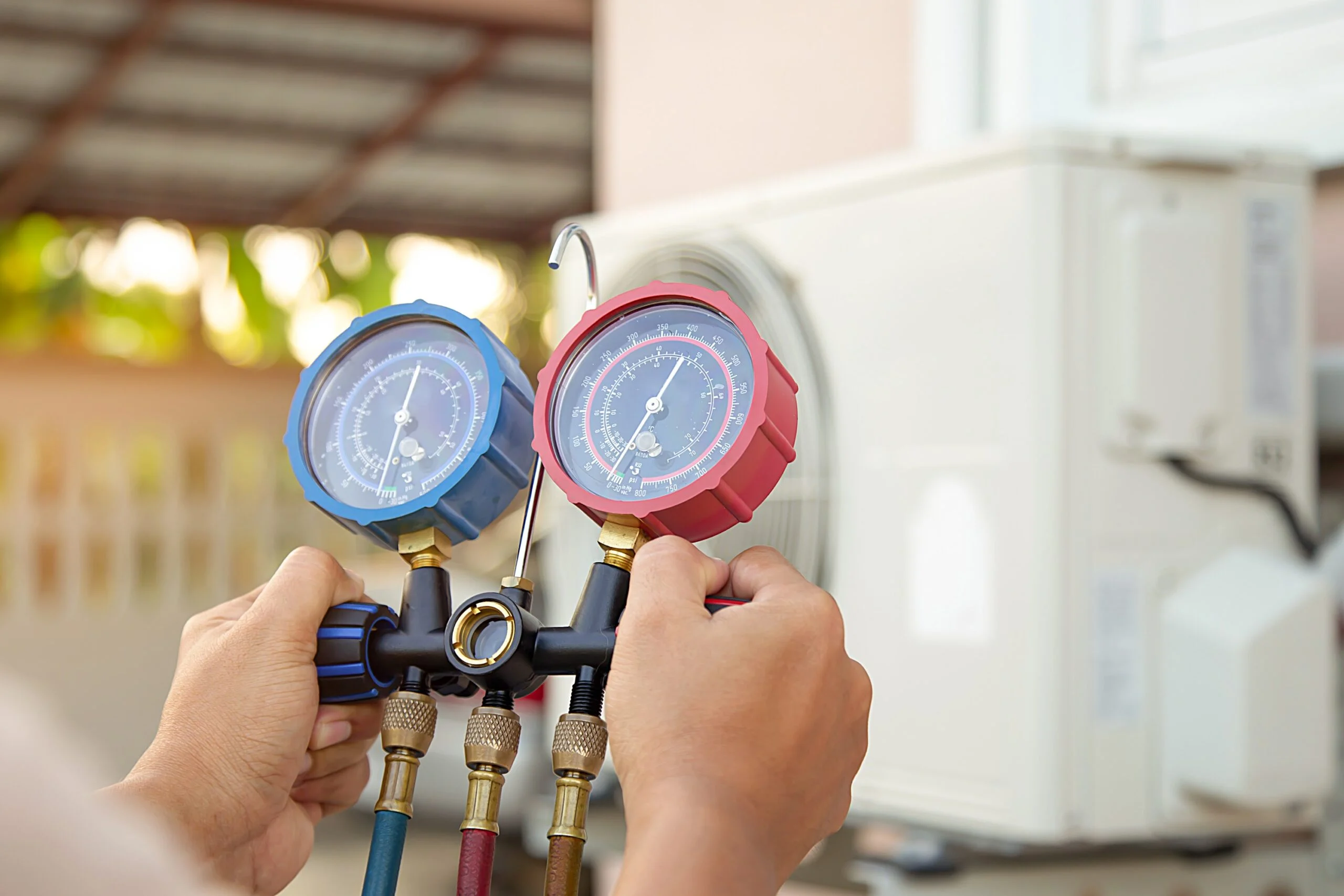
Clear and treat the condensate drain line. This is the big one. In Florida humidity the drain line grows biological gunk, and a blocked line either shuts the system down on the float switch or backs up into the air handler and through your ceiling. Of the three things that fail in an empty house, this is the one that does structural damage.

Clear the outdoor unit. Cut back vegetation, move anything stacked against it, and give it room to breathe. Storm season will add debris on its own without you starting from a deficit.

Replace the thermostat batteries. A dead thermostat is a system that is not running, and you will not know.

Install a smart thermostat. This is the single best investment for a seasonal home. It lets you see indoor temperature and humidity from wherever you are and alerts you when conditions drift. That turns a catastrophic discovery in November into a phone call in July.

What actually fails while you are away

In our experience it is nearly always one of three things, in this order:

  1. The condensate drain line backs up. Either the float switch shuts the system down and the house sits at 95 degrees for months, or it overflows and you come back to water damage.
  2. The filter clogs. Airflow drops, the coil ices, and efficiency falls off a cliff.
  3. Storm debris or overgrowth blocks the condenser. The system runs hot, works harder, and can trip out entirely.

All three are cheap to prevent and unpleasant to discover from a doorway with your luggage still in the car.

Coming back

Book a startup visit before you arrive rather than after. Filter, drain line, condenser, refrigerant charge, and a general check, done a few days ahead, means the house is cool and dry when you open the door.

It also means that if something did go wrong in July, you find out about it with time to fix it, instead of on the first hot afternoon of your stay.

If you would rather not think about it

That is what a seasonal home programme is for. A departure visit that sets the system up properly, an optional mid-season check, and a startup visit before you return.

It is a small amount of money against the cost of a house that spent five months at 85 percent humidity.

FAQ

Frequently Asked Questions

The answers Southwest Florida homeowners ask us most often.

What is the $5,000 rule for AC?
Multiply the age of the system by the cost of the repair. If the result is over $5,000, replace it; if it is under, repair it. A 10-year-old system facing a $600 repair gives you 6,000, so that leans replace. It is a rough guide rather than a law, and on this coast it leans further toward replacement than it would inland, because salt exposure shortens equipment life here.
What is the 3-minute rule for air conditioners?
Wait at least three minutes before restarting an air conditioner after it shuts off. Restarting sooner can make the compressor try to start against high refrigerant pressure that has not equalized yet, which is hard on it and can trip the breaker. Most modern thermostats enforce the delay on their own.
What is the average lifespan of an AC unit in Florida?
Shorter than the manufacturer figure. Florida systems run close to year round, so a well-maintained inland unit commonly reaches 12 to 15 years. Within a few miles of the Gulf, where salt corrodes the outdoor coil and electrical components, 8 to 12 is more realistic without proactive corrosion care.
What does a typical AC repair cost?
It depends entirely on what failed, which is why we diagnose before quoting. A capacitor is at the cheap end, a compressor or coil replacement at the expensive end. What we can promise is the process: a licensed technician diagnoses the system at your home, you get the exact price in writing before any work starts, and that price does not change mid-job.
Why is my AC running but not cooling?
The common causes are a dirty filter restricting airflow, low refrigerant from a leak, a failed capacitor stopping the outdoor fan, a frozen evaporator coil, or a clogged condensate drain shutting the system down on its float switch. If the house is at temperature but still feels damp, that is a different problem: usually an oversized system that short-cycles and never dehumidifies.
Do you offer 24/7 emergency AC repair in Englewood?
Yes. True AC of Southwest Florida runs emergency air conditioning service around the clock across Englewood and the surrounding Southwest Florida communities. A no-cool call in August is not something that waits until Monday, so there is a real person on the line at any hour.
How often should an AC be serviced?
Once a year is the floor. For homes within a few miles of the Gulf, including Manasota Key, Grove City, Placida, and much of Englewood, twice yearly is the better call. The difference is almost entirely about how often the condenser coil gets rinsed of the salt that corrodes it.
How quickly can a technician get to my home?
We dispatch locally rather than routing trucks down from a bigger city, so drive times across Englewood, Rotonda West, Grove City, Placida, and Port Charlotte are short. Emergencies are prioritized and same-day appointments are often available. You get a clear arrival window when you book.
What areas do you serve?
We serve Englewood, Rotonda West, Grove City, Placida, Manasota Key, Englewood Isles, South Gulf Cove, Cape Haze, Port Charlotte, North Port, Venice, Punta Gorda, Nokomis, and Sarasota, across Sarasota and Charlotte counties.

Find Us in Southwest Florida

Based in Englewood and dispatching across Sarasota and Charlotte counties, from Sarasota and Nokomis down through Venice, Rotonda West, Port Charlotte, and Punta Gorda.

What Southwest Florida Says

Real Reviews From Real Southwest Florida Customers

Live from our Google Business Profile and Facebook page. Updated automatically.

Reviews

We are just getting started on the Gulf coast

Rather than borrow anyone else's reviews, we would rather earn our own. If we have worked on your system, a review helps the next homeowner in Englewood decide who to call.

Request Service
Tap to call · 24/7 (941) 555-0100 Or schedule online →